Identification guide

Is it really bees?

Before you call a beekeeper, spend thirty seconds checking. Beekeepers only collect honey bee swarms — everything else needs a different kind of help.

Side by side

Four things people often mistake for a swarm

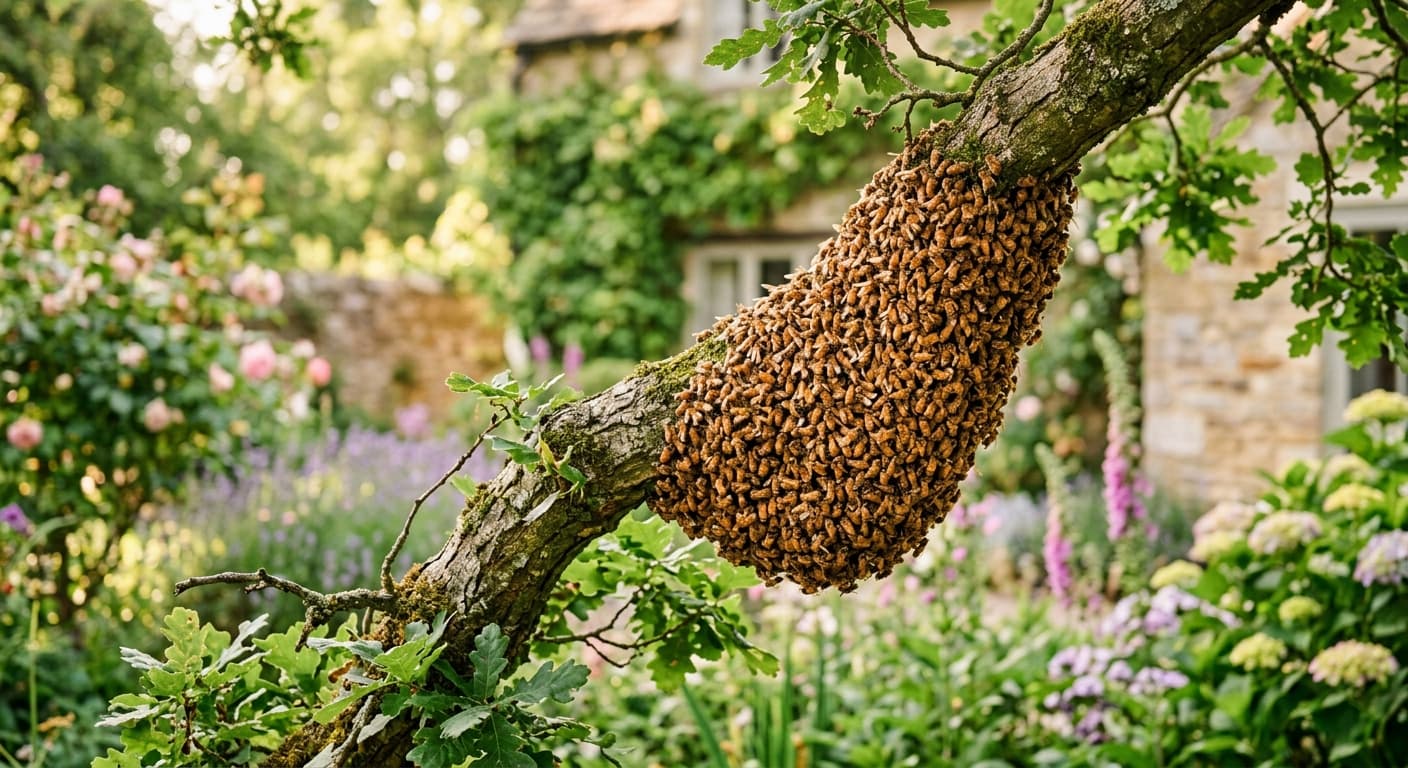
A honey bee swarm looks unmistakable once you have seen one. Here is what it isn't.

Teardrop-shaped honey bee swarm hanging from a tree branch

Honey bee swarm

Report this
  • Tight cluster the size of a football or rugby ball
  • Hanging from a branch, fence, wall or post
  • Thousands of bees moving gently around the cluster
  • Appears suddenly — usually May to July
  • Not scattered individuals on flowers
  • Not inside a wall cavity or roof (that is a colony, not a swarm)

Report it — a local beekeeper can collect the swarm for free.
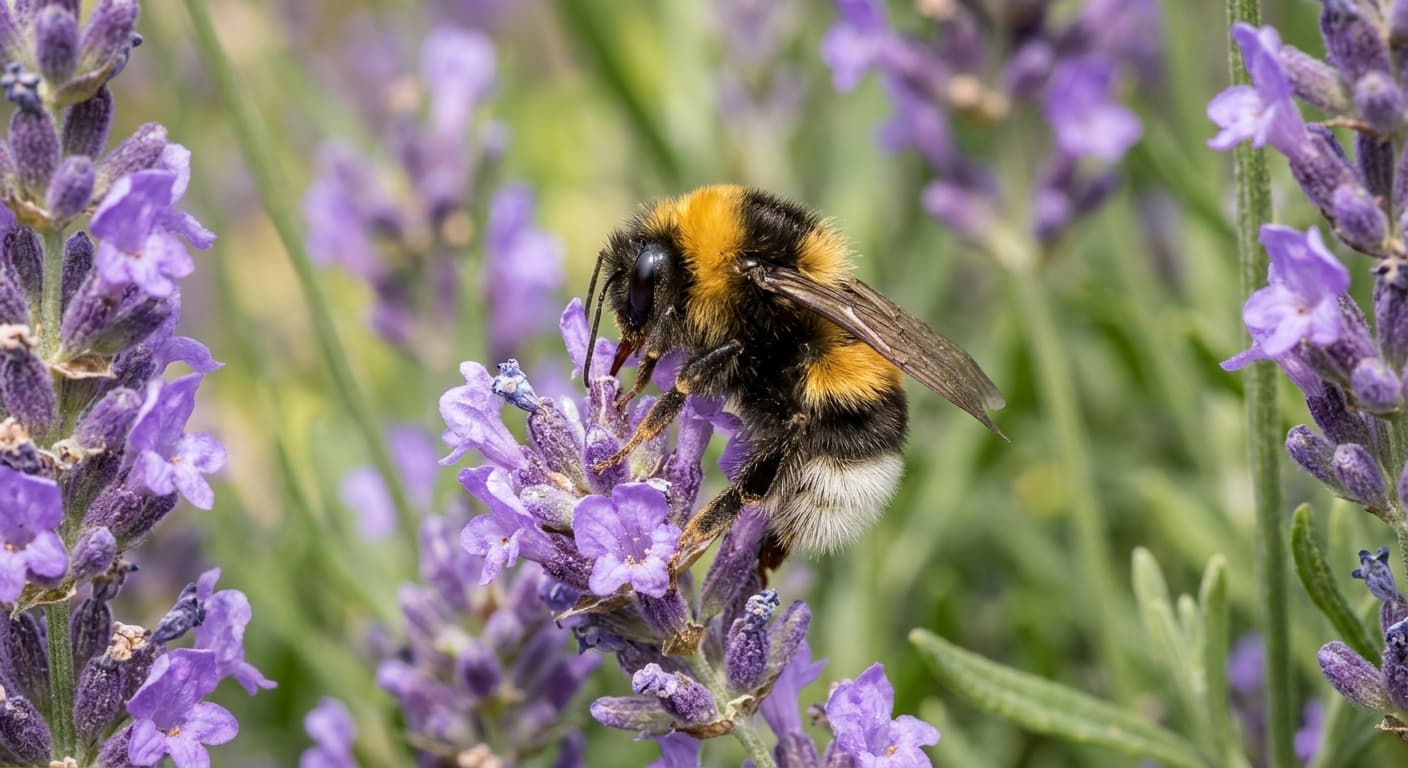
Bumblebee feeding on lavender

Bumblebee

Leave alone
  • Large, fuzzy, round body with visible stripes
  • Usually alone on flowers, or a small nest (under 200 bees)
  • Nest in a bird box, compost heap, or mouse hole
  • Not a swarm — colonies are small and die off by autumn
  • Not aggressive unless the nest is directly disturbed

Beekeepers cannot relocate bumblebees. Leave them — they will be gone by October.

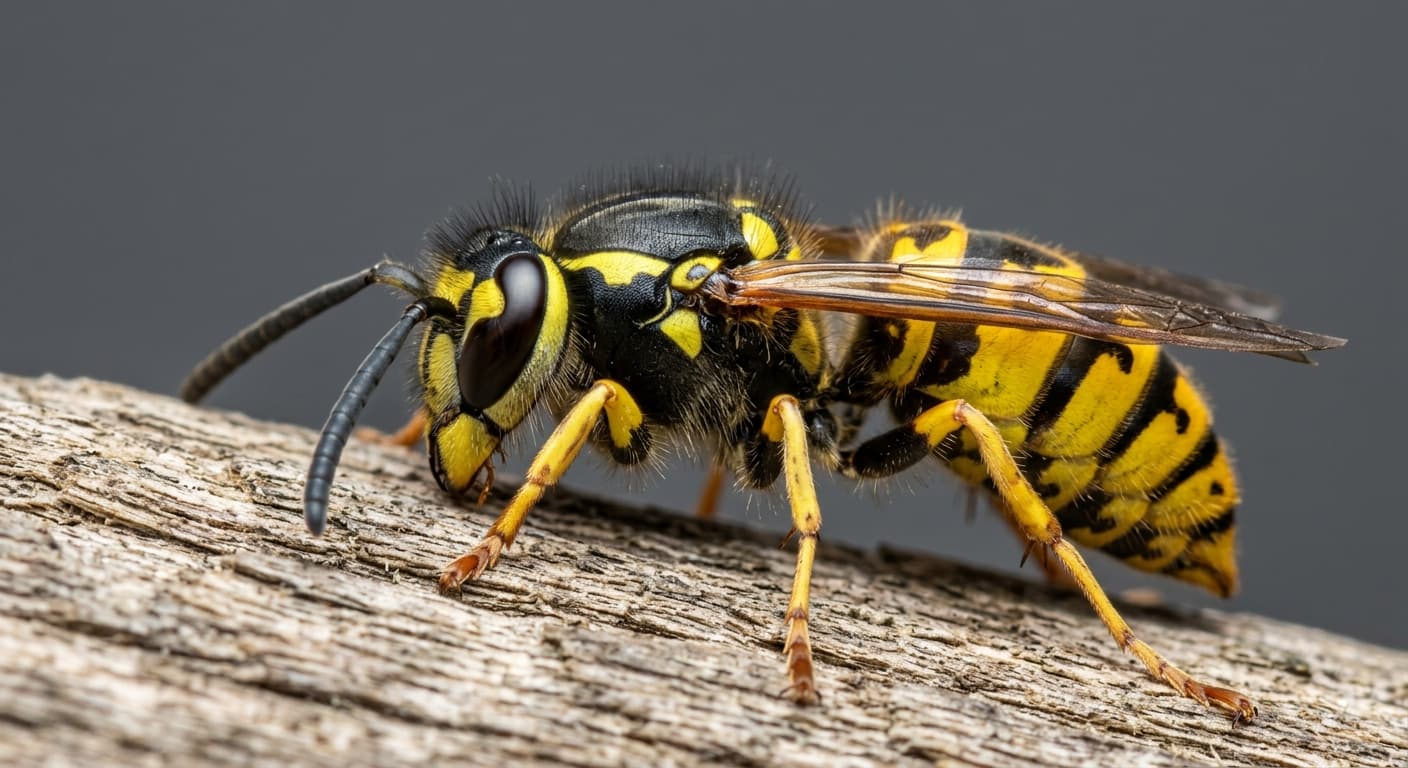
Close-up of a yellow-and-black wasp on weathered wood

Wasps or hornets

Not bees
  • Smooth, shiny yellow-and-black body (no fuzz)
  • Papery grey nest in a loft, shed or hedge
  • Aggressive around the nest, especially late summer
  • Not a honey bee — beekeepers will not come out for these

Call a licensed pest controller, not a beekeeper.

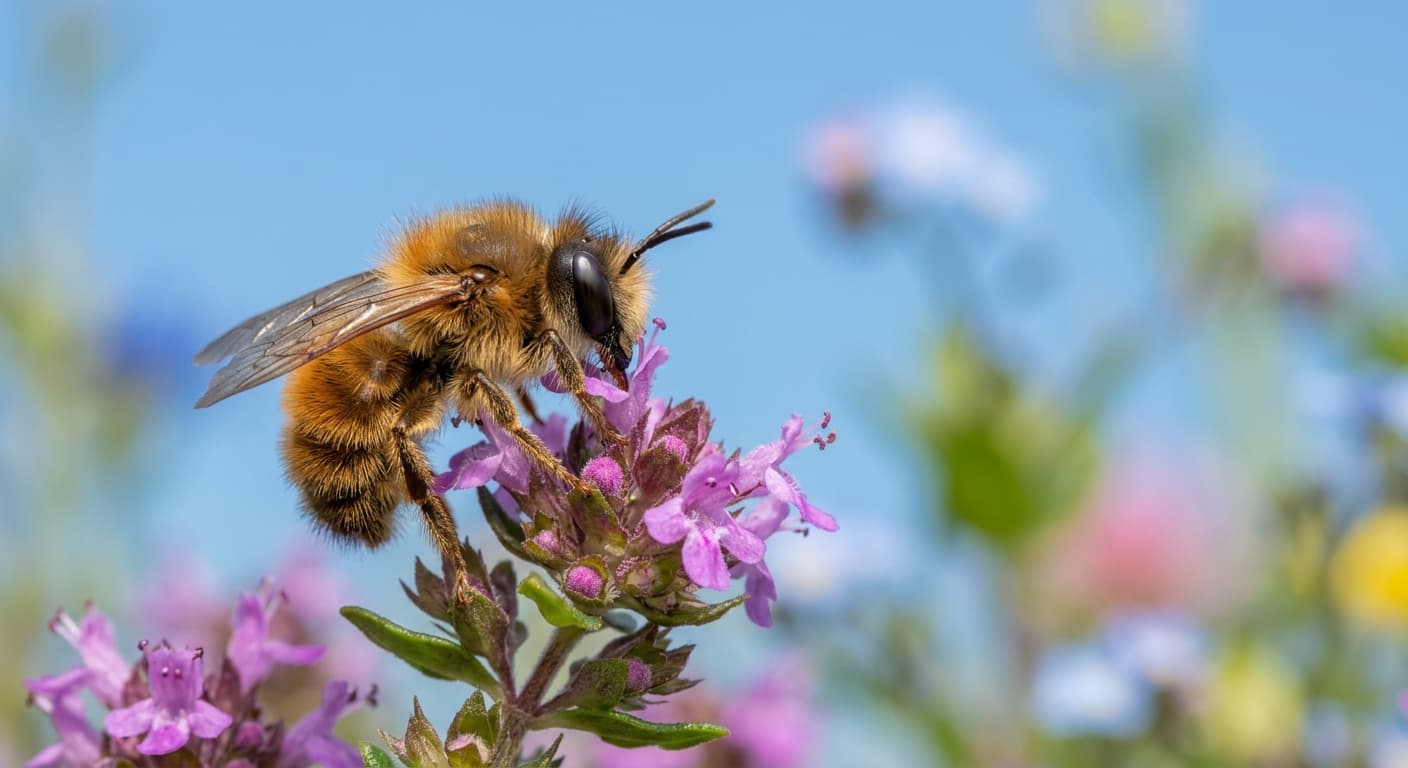
Solitary bee perched on a pink wildflower

Solitary bees

Leave alone
  • A single bee, often smaller than a honey bee
  • Small holes in a lawn, wall, or sandy bank
  • Active for only a few weeks in spring or summer
  • Do not live in colonies — no swarm to collect
  • Do not sting unless trapped

Harmless and short-lived. Enjoy them while they are here.

Still not sure? Take a photo from a safe distance.

A clear photo is the fastest way for a beekeeper to confirm. Stand a few metres back — swarms are rarely aggressive, but there is no need to get close.

It's a honey bee swarm. Now what?

Reporting takes under a minute and it is free. A local beekeeper will be in touch to collect it.